
If you've ever wondered how cold it needs to be to make snow in your backyard, the answer isn't quite as simple as looking at the thermometer. Temperature is one of the most important parts of snowmaking, but humidity plays an equally important role. Understanding how these two factors work together will help you know when conditions are right for making real snow.
How Cold Does It Need to Be?
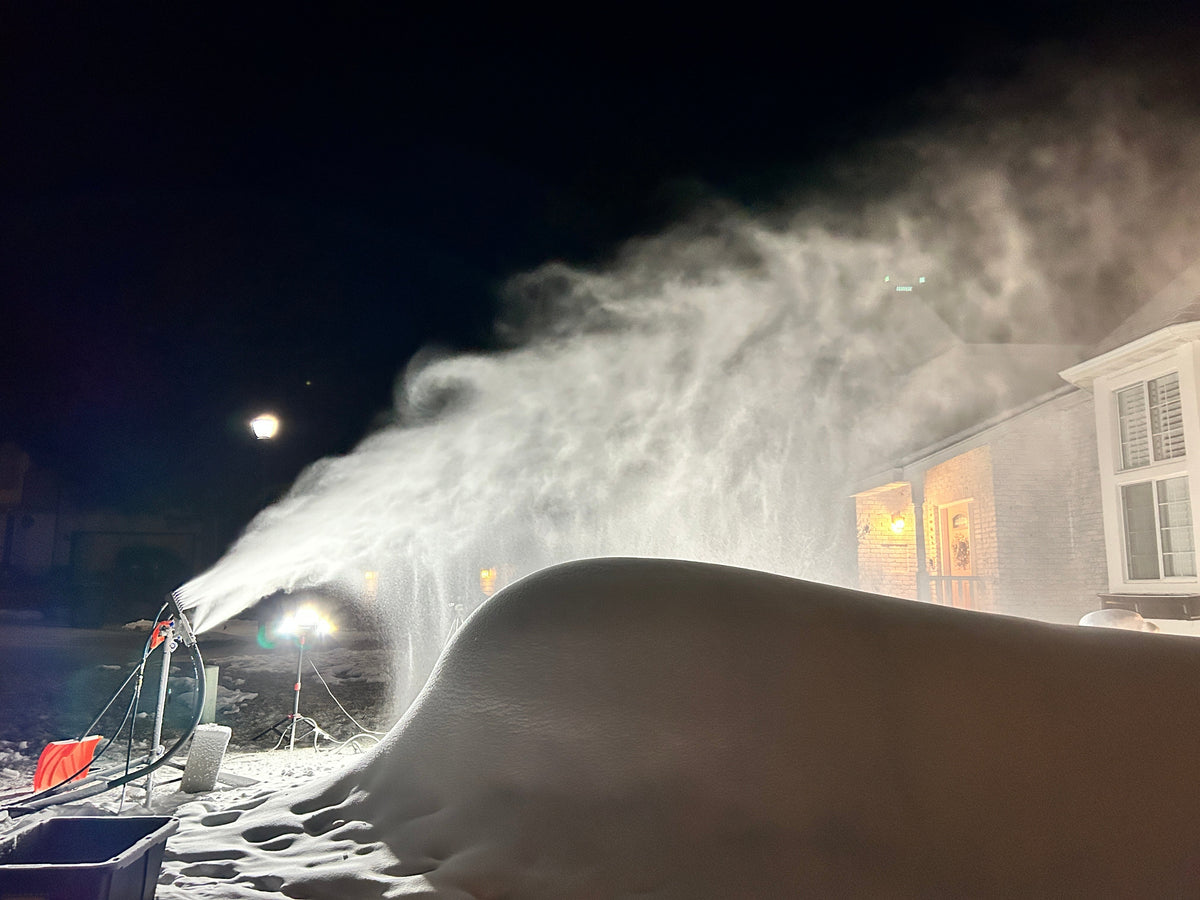
Snowmaking works by turning water into extremely small droplets and sending them into the cold air. As those droplets travel through the air, they cool and freeze, eventually becoming snow before reaching the ground.
As a general rule, temperatures around 28°F (-2.2°C) and colder provide good conditions for snowmaking. However, you may be able to make snow when the air temperature is slightly warmer—or find that conditions aren't ideal even when the thermometer reads below freezing.
That's because the temperature you see on a thermometer doesn't tell the whole story.
What Is Wet-Bulb Temperature?
The key to understanding snowmaking conditions is wet-bulb temperature.
Wet-bulb temperature takes both the air temperature and relative humidity into account. It represents how cool the air can become through evaporation, which is especially important when water droplets are released from a snow gun.
When humidity is low, water evaporates more easily, allowing the droplets to cool faster. This means you can sometimes make snow at a higher air temperature than you might expect. When humidity is high, evaporation is reduced, making snowmaking more difficult.
For this reason, wet-bulb temperature is a much better indicator of snowmaking conditions than air temperature alone.
And in general, the lower the wet-bulb temperature, the better the conditions for producing high-quality snow.
Temperature and Humidity Work Together
Consider two nights when the thermometer reads the same temperature. If one night has significantly lower humidity, the snowmaking conditions may be much better than on the more humid night.
This is why simply waiting for the temperature to drop below freezing isn't always enough. The combination of temperature and humidity determines whether your snow gun can produce snow and what kind of snow it will produce.
Our Snowmaking Weather Chart makes it easy to see how these two factors work together. You can use the chart to find the wet-bulb temperature for a given air temperature and humidity level and determine whether conditions are suitable for snowmaking.
How to Get an Accurate Reading
Weather conditions can vary considerably from one location to another, so the temperature and humidity reported by a weather station several miles away may not accurately represent the conditions in your backyard.
For the best results, check the temperature and humidity as close to your snowmaking area as possible. A local weather station or a thermometer and humidity sensor near your home can give you a much more accurate picture of the conditions where you'll actually be making snow.
A small difference in temperature or humidity can change your wet-bulb temperature, so accurate readings can make a big difference when you're trying to decide whether it's time to fire up your snow gun.
Let Snowbase Check the Weather for You
If you don't want to constantly calculate wet-bulb temperature yourself, Snowbase can help.
Snowbase is a weather app designed to make it easier to understand your local snowmaking conditions. Using your location and current weather information, Snowbase can tell you whether conditions are suitable for making snow, taking the important weather factors into account.
Instead of trying to figure out temperature, humidity, and wet-bulb temperature on your own, you can use Snowbase to quickly check whether it's a good time to start making snow.
So, How Cold Does It Really Need to Be?
There isn't one temperature that guarantees you'll be able to make snow. Around 28°F is a good general starting point, but wet-bulb temperature is what really matters.
The colder and drier the air is, the better your snowmaking conditions will generally be. As humidity increases, you'll need colder air to achieve the same wet-bulb temperature.
Once you understand how temperature and humidity work together, you'll have a much better idea of when to turn on your snow gun and start building your backyard winter.
Check the Snowmaking Weather Chart to see exactly how temperature and humidity affect your snowmaking conditions, or use Snowbase to quickly check the conditions for your location.
Share:
Making Unforgettable Memories
The Snow Gun: The Heart of Your Backyard Snowmaking System