

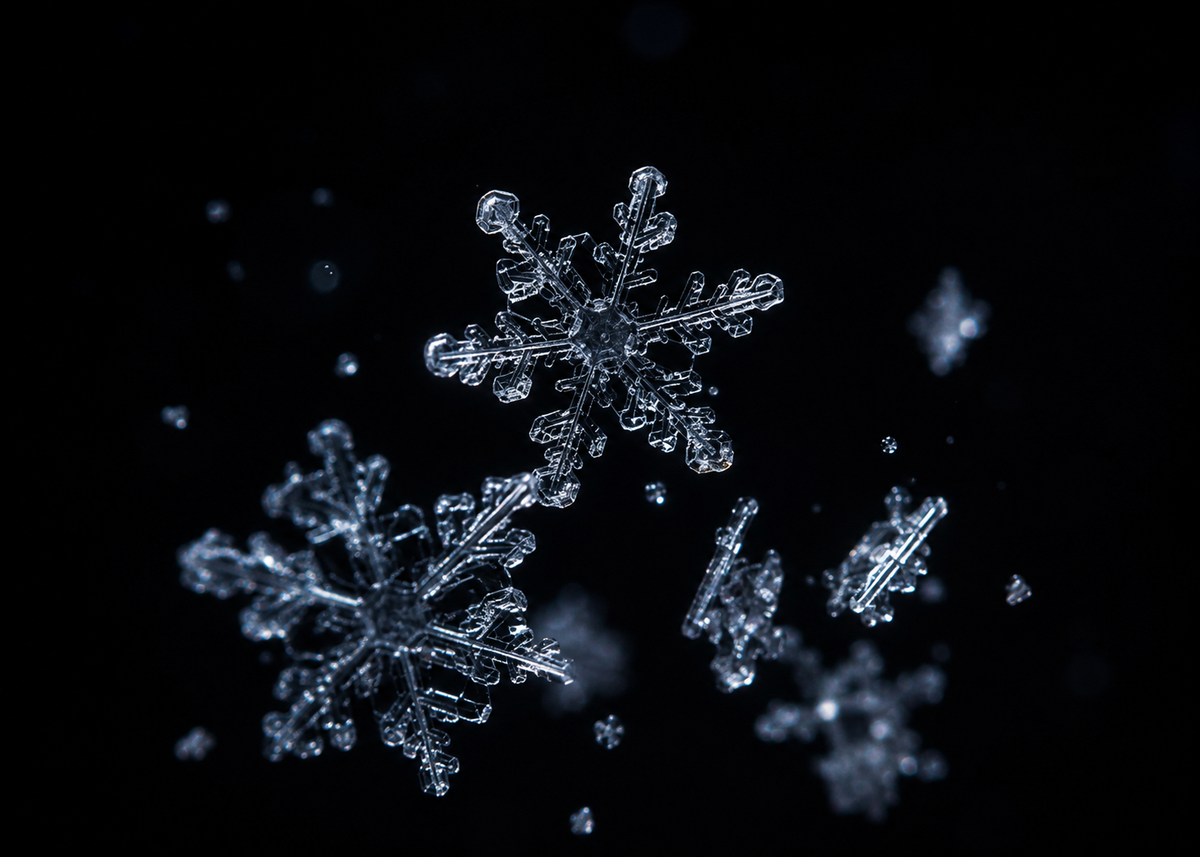
When it comes to snowmaking, water droplet size matters. A snow gun isn't simply spraying water into the air and hoping it freezes. The water needs to be broken into appropriately sized droplets so they can cool and freeze quickly enough to become snow.
Understanding droplet size also helps explain why pressure, water flow, and the design of your snow gun all work together to determine the quality of the snow you produce.
Why Droplet Size Matters
A large water droplet takes longer to freeze than a small one. Since a snow gun only gives each droplet a few seconds of hang-time in the air, creating the right droplet size is critical.
Backyard Snowstorm snow guns use misting nozzles designed to produce droplets in the range of approximately 500–1,500 microns. These droplets are sized to grow around the much smaller ice crystals created by the snow gun's nucleator.
The smaller the droplet, the faster it can cool and freeze. This becomes especially important when you're making snow in marginal weather conditions, where every degree of cooling matters.
What Does Water Pressure Have to Do With It?
Water pressure plays an important role in controlling droplet size. Increasing the water pressure through the snow gun can reduce the size of the main water droplets, allowing them to freeze more quickly.
Backyard Snowstorm's misting nozzles are designed to operate most effectively within a specific pressure range. The nozzle size and number of nozzles are also matched to the amount of water flowing through the snow gun.
This is one reason why the pressure washer you use with a Forecaster or Cold Front matters. The goal isn't simply to push as much water as possible through the system. The water flow, pressure, and nozzle configuration need to work together.
The Role of the Nucleator
Droplet size is only part of the equation. Those droplets also need a place to begin freezing.
The nucleator creates microscopic ice crystals that act as starting points for the rest of the snowmaking process. Backyard Snowstorm's nucleator uses compressed air to break a small amount of water into extremely tiny droplets. These droplets can rapidly cool and form the ice crystals needed to turn the larger water droplets into snow.
The nucleator produces ice crystals approximately 30–70 microns in size, which then interact with the larger droplets from the misting nozzles.
Adjusting Droplet Size in Marginal Conditions
Sometimes you may be making snow when conditions aren't quite ideal. In these situations, making adjustments to your snow gun can help optimize the snowmaking process.
The Needle Valve is an optional accessory compatible with all Backyard Snowstorm snow guns. It attaches to the back of the nucleation nozzle and allows you to regulate the amount of water going to the nucleator.
When overall snow gun water pressure is increased, the main spray droplets become smaller and can freeze faster. The needle valve allows you to reduce and regulate the water going to the nucleator so it continues receiving the proper amount of water for creating the ice crystals needed for effective snowmaking.
The Goal: Turn Water Into Snow
Making good snow isn't simply about using more water or more pressure. It's about creating the right combination of droplet sizes, pressure, water flow, compressed air, and weather conditions.
The snow gun's nozzles create appropriately sized water droplets, while the nucleator creates the microscopic ice crystals those droplets need to freeze around. When everything is working together—and the weather provides the right conditions—water can be transformed into the quality snow you're looking for.
That's the science behind making better snow.
Share:
How to Make Better Snow: Temperature, Humidity & Wet-Bulb
Nucleation Explained: The Secret to Making Real Snow